Prepared for Craig Tiley · USTA · September 2026
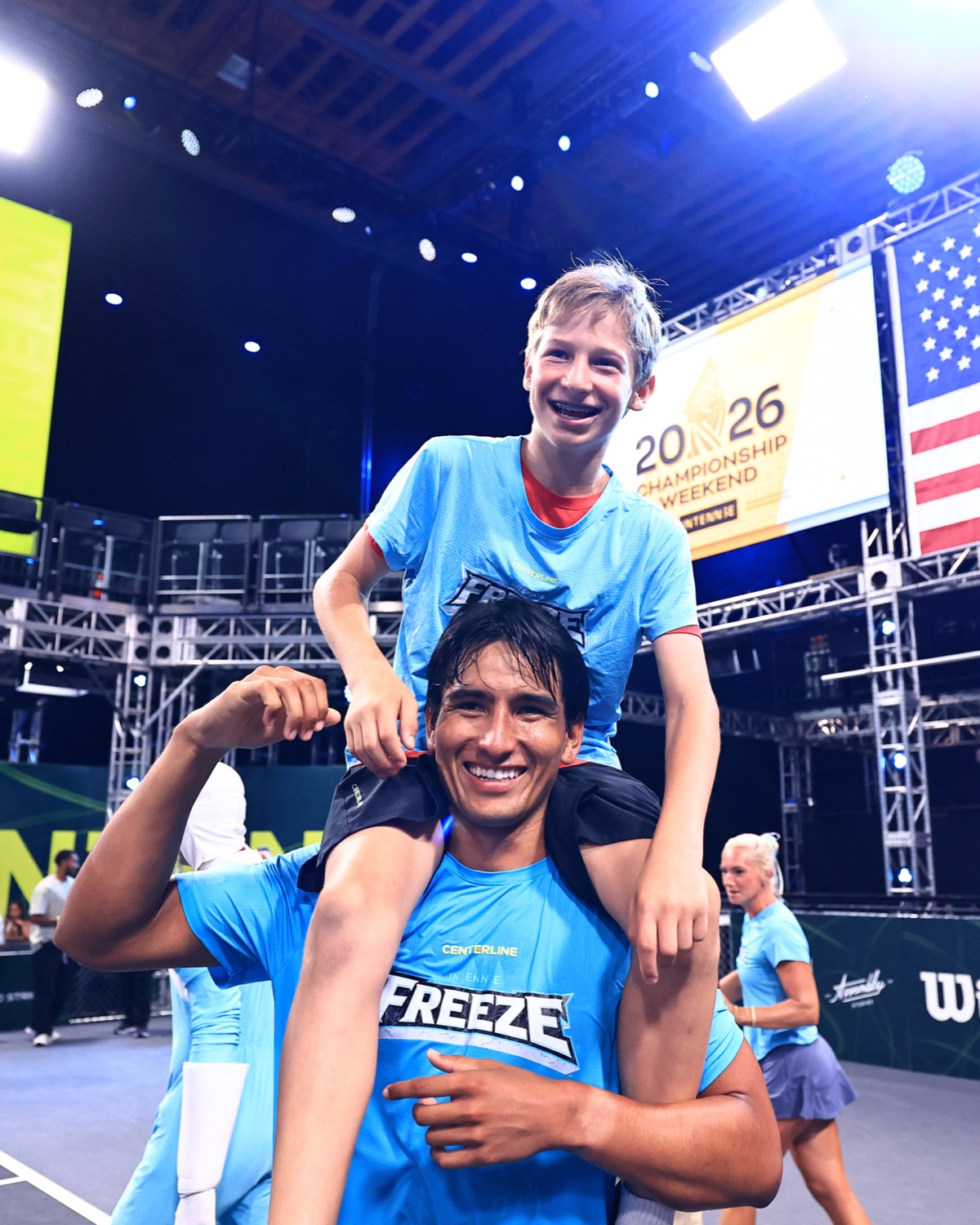
“This one you can have fun.”
A kid in the stands in Atlanta, explaining the product better than our deck does. They watch at home with their family. They came to watch their sister play.
INTENNSE Arena, Atlanta · 2026 season
■ The mandate
Seven point seven million people, in nine years.
American tennis is growing and the numbers are real: a sixth consecutive year of growth, up 54% since 2019, 4.9 million first-time players last year alone. None of that is in dispute.
But 35 by ’35 asks for 7.7 million more players, and asks for them through the same three doors the strategy names — programming that keeps people on court, coaches to run it, and courts to run it on. The question isn’t whether tennis is growing. It’s what carries the next 7.7 million, and what counts them when they arrive.
■ The premise
The same courts. A different product.
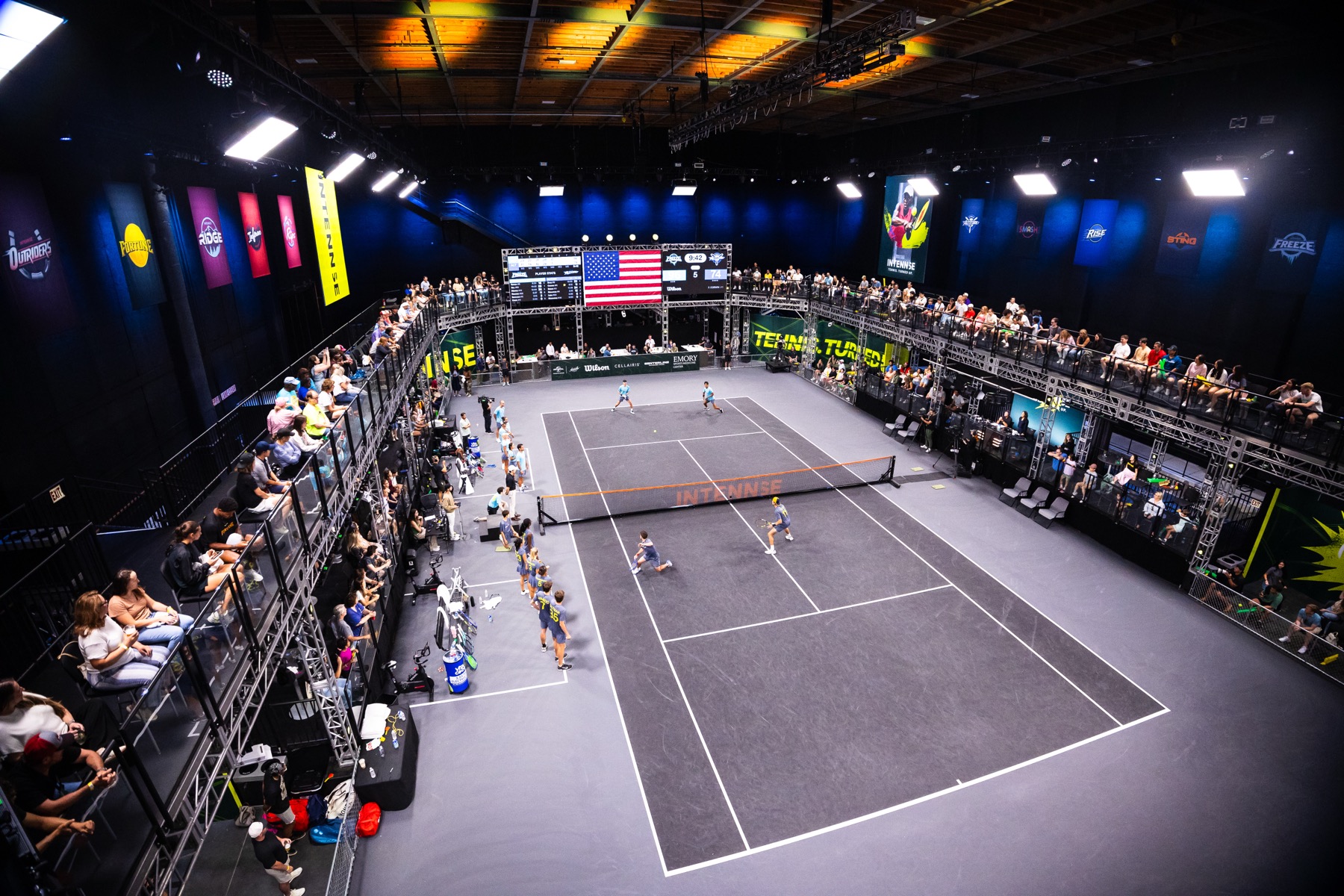
INTENNSE doesn’t need new infrastructure. It runs on the installed base American tennis already has — the courts, the racquets, the clubs, the coaches, the volunteers.
What’s new is the layer on top: city teams, co-ed rosters, time-boxed matches that start and finish when we say they will, and an event built for the room as much as the broadcast. It’s the same hardware, running software people actually want to watch.
That matters for a participation target because the constraint on 350,000 courts isn’t concrete. It’s whether there’s a reason to be on them on a Tuesday.
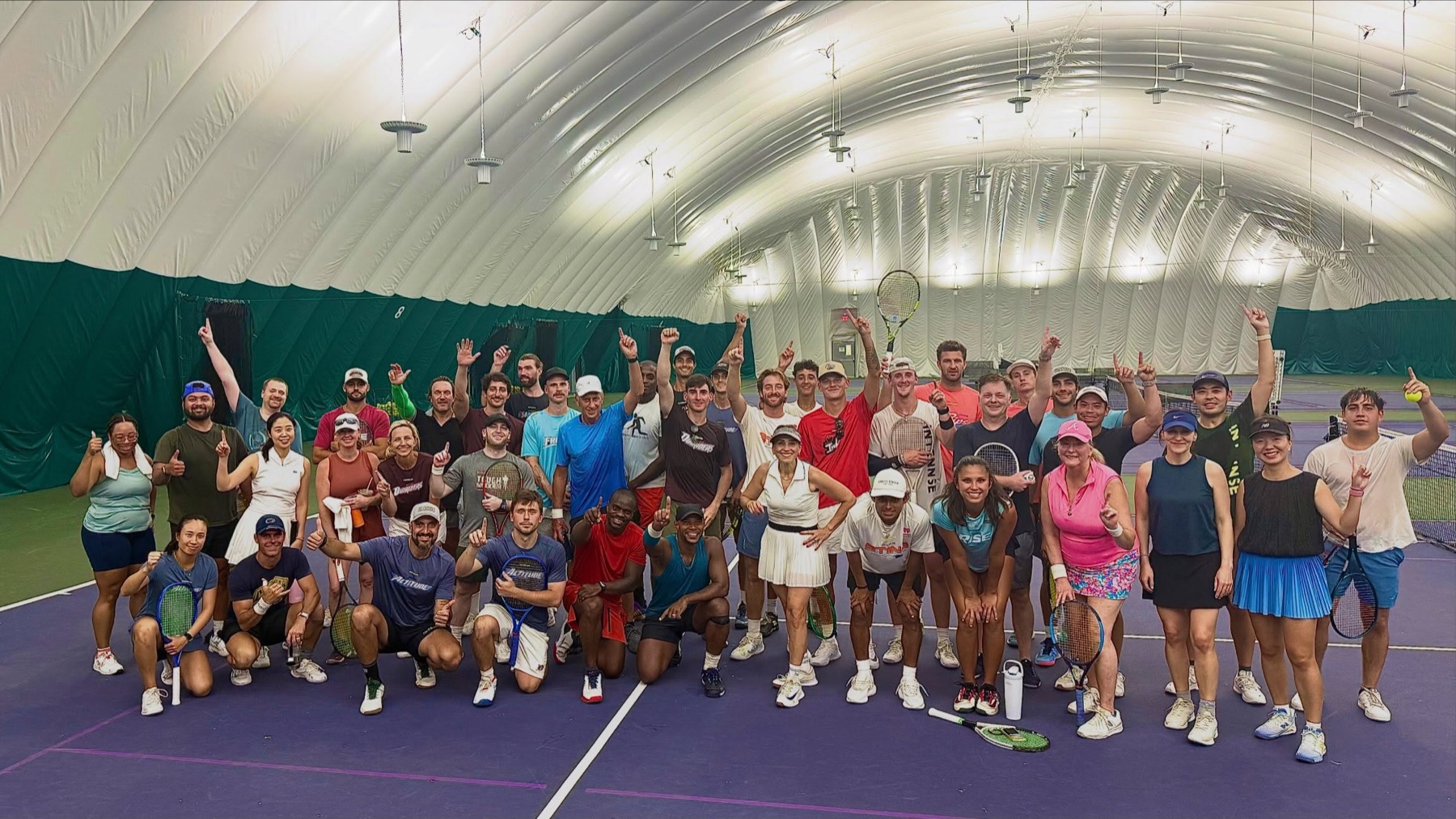
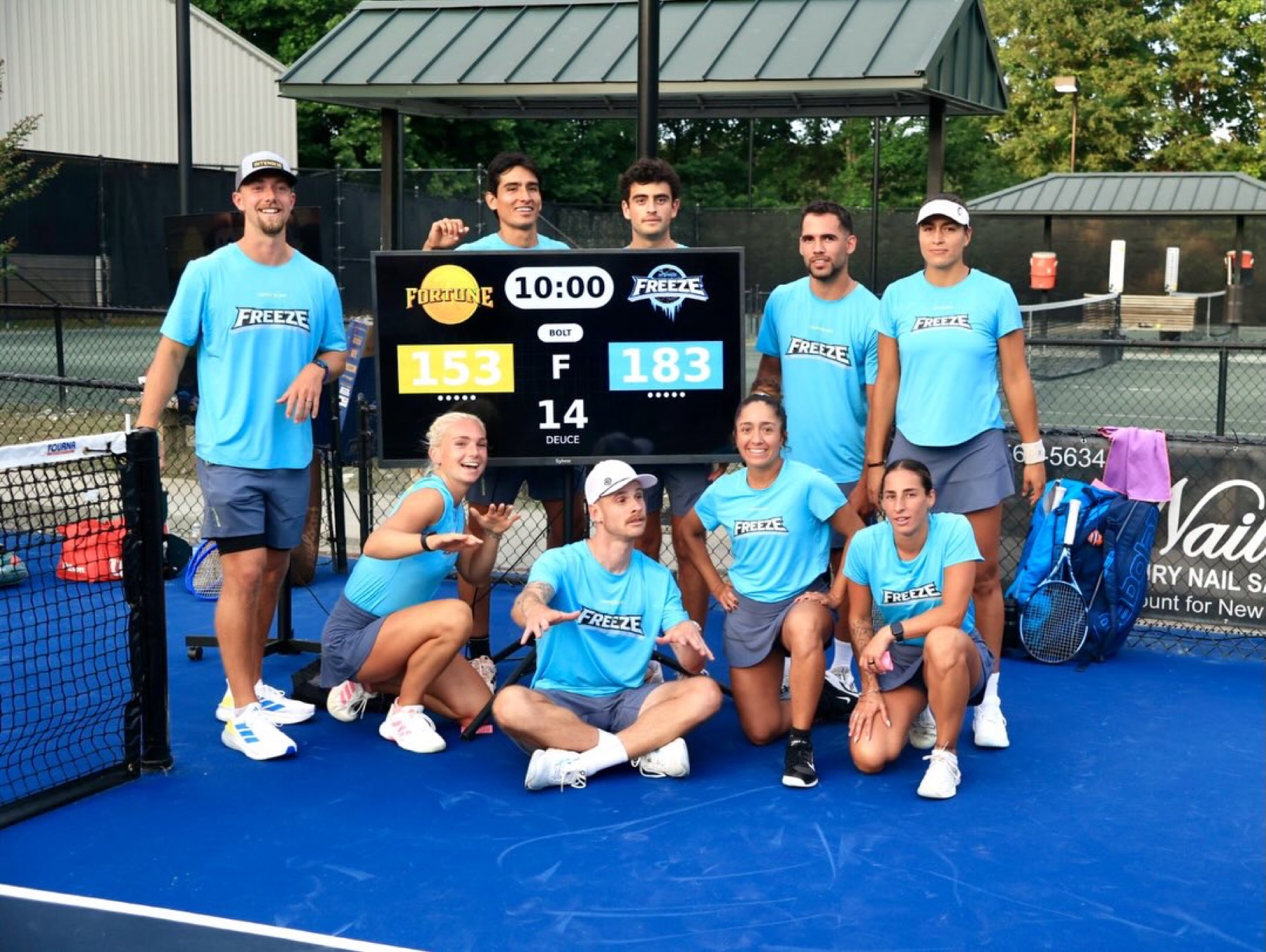
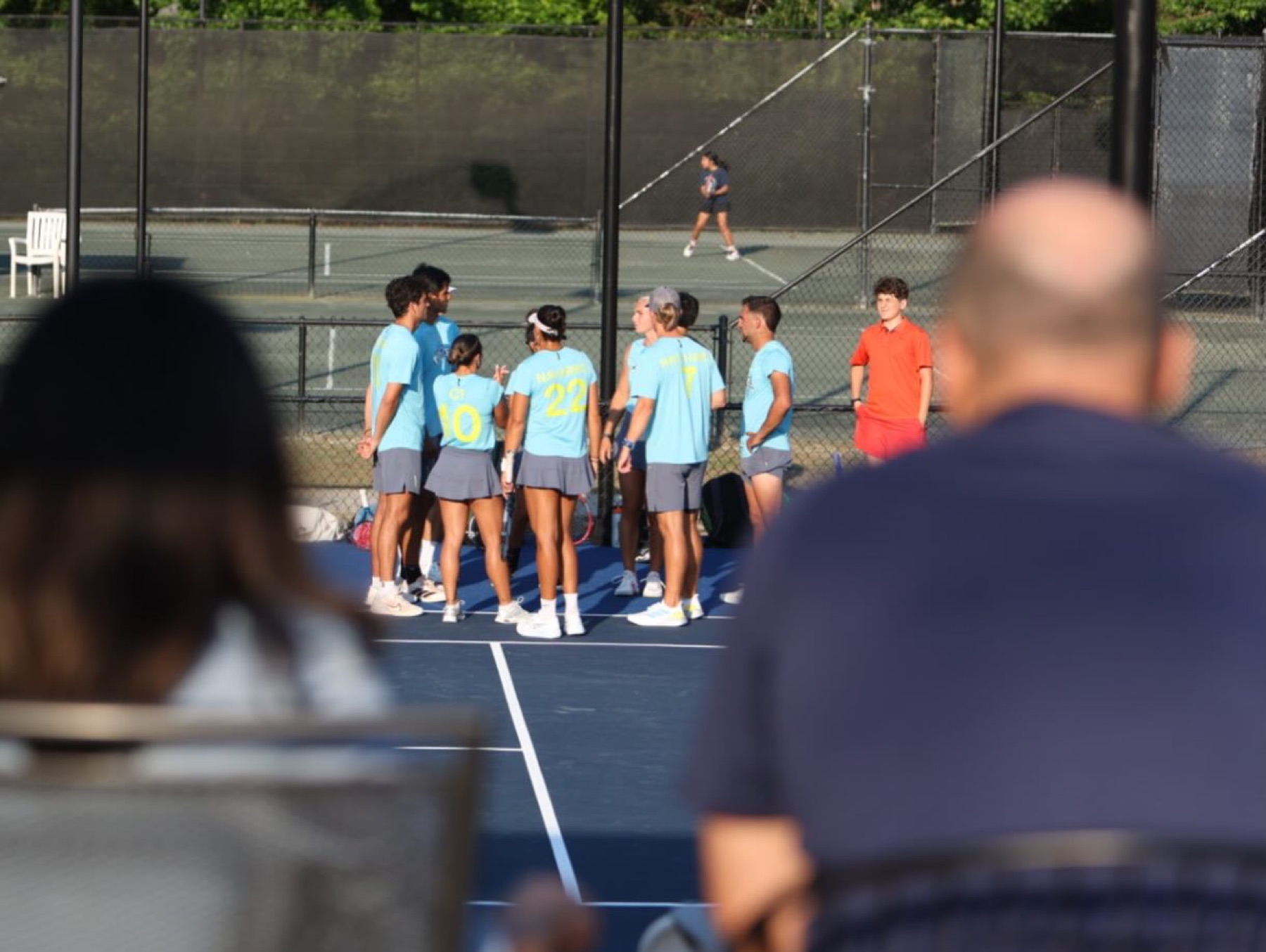
And none of it is tied to the building. The arena is where we broadcast from — it isn’t what the format requires. The same competition runs on ordinary club courts, in a dome on a weeknight, at a public facility, on a campus. That portability is the whole point: a format that only works in a purpose-built studio can’t move a national participation number.
■ The proof, already inside your organization
USTA Atlanta coached eight of our athletes, then said so publicly.
Amy Bartlett O’Connell, Executive Director of USTA Atlanta, coached eight INTENNSE athletes through the 2026 season with the Outriders. On Championship Weekend she wrote about it on her own feed.
“Innovative, fast-paced, co-ed team format challenged our players in new ways while creating an electric atmosphere that brought a fresh energy to the game.”
Amy Bartlett O’Connell · Executive Director, USTA Atlanta · 31 July 2026
She described the league as committed to making tennis “more engaging, more accessible, and more fan-focused… and FUN!” — which is the same word the kid in the stands reached for, unprompted, at the top of this page.
We didn’t commission that, and we didn’t pay for it. A section leader inside your own organization ran a roster in the format for a full season and recommended it on the record, closing with: “I truly believe we’re only seeing the beginning of INTENNSE.”
If the structural problem you’ve named is that the parent organization and its 17 sections don’t pull together, this is a small piece of evidence pointing the other way — a section and a format-innovative league already working, in one of the country’s deepest tennis markets.

■ The cadence
“I would like to see events every single week, so American players can stay basically at home and go from coast to coast, city to city, and play and become a top-100 player.”
Craig Tiley · Sports Business Journal · 21 August 2026
That season already exists. It ran this summer, in one city, on a schedule built for exactly that shape: a fixed window, a weekly rhythm, teams that travel, and players who stay in the country to compete.
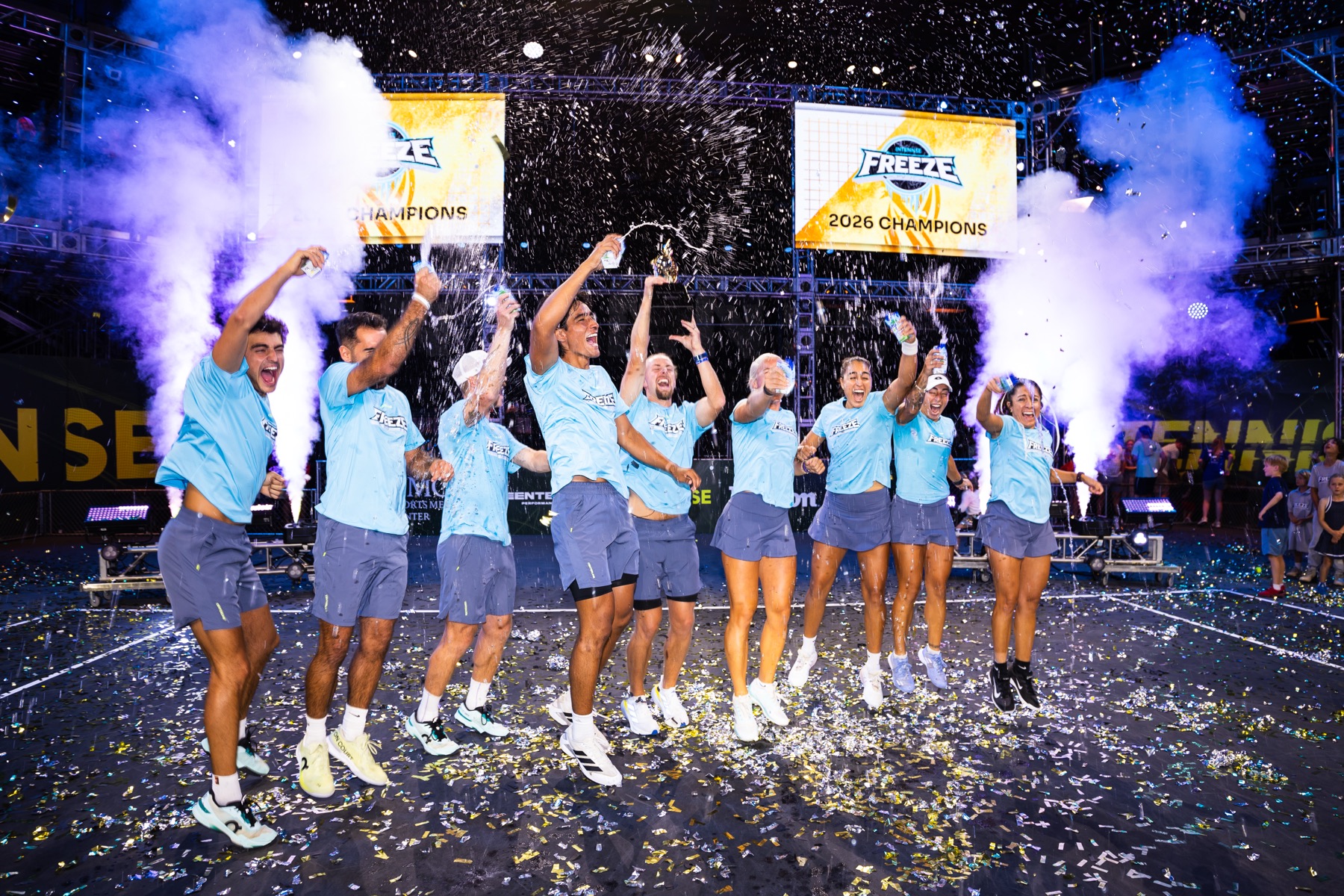
Season 2 closed on 1 August with Freeze beating Outriders 137–130. The infrastructure to repeat it in ten cities is built; the format is proven on air; the question is how fast it scales and who it scales with.
The Rules of INTENNSE, explained · 2:04
INTENNSE is Back! · 1:00
Record live concurrents across the final series.
Nearly 8,000 fans through a 500-seat arena.
Two broadcast, two RSNs, seven FAST, three streaming — 60% of watch time on TV.
Peak rating on Peachtree, the local broadcast partner.
■ The pathway
Children can play the exact thing they just watched.
The reason a professional league belongs in a participation conversation is that INTENNSE is the same game at every level. A child who watches an Arc on Saturday can play that format on Monday — same rules, same team structure, same identity, on the court that’s already down the road.
Tennis has always had that continuity, and it’s a real advantage: a club player on a Tuesday uses the same court and the same scoring as a US Open final. What the sport hasn’t had is a version of itself built to be watched — matches of unpredictable length, scoring that assumes you already know the game, and nothing local to belong to once the broadcast ends.
Our bet is on the last of those. A team with a name, a city and a season is a retention mechanism, which is what your first pillar asks for: programming that keeps new and returning players on court for life.
We won’t overclaim it. Season 2 is the first season at this scale, so we cannot yet show you a cohort that watched an Arc and joined a league. What we can show you is that the format is identical from the arena to the junior program — which makes that number measurable from the first day anyone decides to measure it.










Junior
Entry programs, camps and local leagues in the team format.
School
High-school and collegiate competition on the same rules.
Club
Youth and adult recreational leagues at partner facilities.
Championship
Regional and national pathways that lead somewhere visible.
The ballkeeper pathway
Ball keepers aren’t staff here. The single-ball rule and the serve clock make them part of the competition, part of a team — which turns a first afternoon on a professional court into a whole family’s way into the sport.
The Challenge Series
An open draw where the winners are drafted into a Challenge Team, coached by a guest professional, and earn an exhibition against a professional roster. Vicky Flores came through it and finished the season as a professional with Team Tampa.

■ An avenue worth testing


College tennis is a broadcast property nobody has built yet.
You already know what college tennis can carry, because you built it once — an interim job nobody wanted, nine straight conference titles, and a perfect season at the end of it.
College tennis is team tennis. It has rosters, rivalries, campuses, colors and a built-in calendar — every ingredient March Madness monetizes, and almost none of the packaging. It goes largely unwatched because nobody has made it legible to a broadcast audience or a brand buyer: no consistent match length, no scoring a casual viewer can follow, no reason for a sponsor to plan a season around it.
That is precisely the problem the INTENNSE format solves. Time-boxed matches, simplified scoring, team identity, predictable windows — applied to a property that already has the affiliation and the passion, at a moment when USTA leadership has publicly called the erosion of the college pipeline a crisis.
A branded, bracketed, broadcast college championship in the INTENNSE format is one avenue this opens. Given where you started, we’d value your perspective on how INTENNSE could strengthen the development pathway.
One part of that we’d particularly want your read on: every INTENNSE team fields three men and three women, in the same match, on the same court, in front of the same broadcast. The women’s results decide the tie exactly as much as the men’s. Equal spots aren’t a policy applied to the format — they are the format. For a sport trying to build depth beneath the very top of the women’s game, that is an unusually direct way to do it: every team that exists creates as many professional places for women as for men, in the same building, on the same night.
■ The structural squeeze
Built the other way round.
Across top-tier sport the same pattern keeps repeating. Revenue concentrates at the apex — premium hospitality, media rights, a handful of marquee events — while the developmental base that feeds it gets comparatively little. Spectacle is easier to finance than grassroots, and the gap compounds quietly for years before anyone names it.
Tennis carries a sharp version of it. The professional game is extraordinarily healthy at the very top and unforgiving a few hundred places down the ranking, where players fund their own travel for a shot at prize money that rarely covers the trip.
INTENNSE is built the other way round. It isn’t drawing off an existing base to inflate an event — it’s adding a tier that didn’t exist, and the money lands on players who had nowhere to earn it: a professional draft, real rosters, and season earnings up to $70,000.
373 players registered for this year’s draft, up 748% on last year. That is a base thickening rather than thinning — and it’s the measure we’d want to be judged on, ahead of attendance or impressions.

■ Why we sent this
There’s no ask attached to this.
We’re not asking the USTA to adopt a league, fund one, or endorse one. You’re two months into the job with a number to move, and you haven’t finished deciding what you want to move it with.
We’ve built something in Atlanta that may turn out to be useful to that number. We’d rather you simply knew it existed — and knew that one of your own section directors has already run a roster inside it — than arrive with a proposal before you’ve set your own direction.
If any of it is worth an hour, we’ll make the time whenever it suits you. If it isn’t, we’ll keep building, and this will have cost you nothing but the scroll.
■ Where an hour could lead
Not proposals. Just the shapes this could take, if the idea appeals at all:
College tennis
Weight behind the push to turn it into something people can actually watch, follow and buy into.
A fixture inside US events
An INTENNSE session built into ATP, WTA and ITF weeks on American soil — more tennis in the week, and more reasons to be in the stands for it.
Players who go out early
First and second round losers are already in the city and already paid to be there. Today they fly home. They could be the best thing on court on day four.
Pros against amateurs
Local players competing through the year for the right to face a professional on that court. A pro-am where the amateurs genuinely play — and every entry is a name in the participation column.
■ From a player
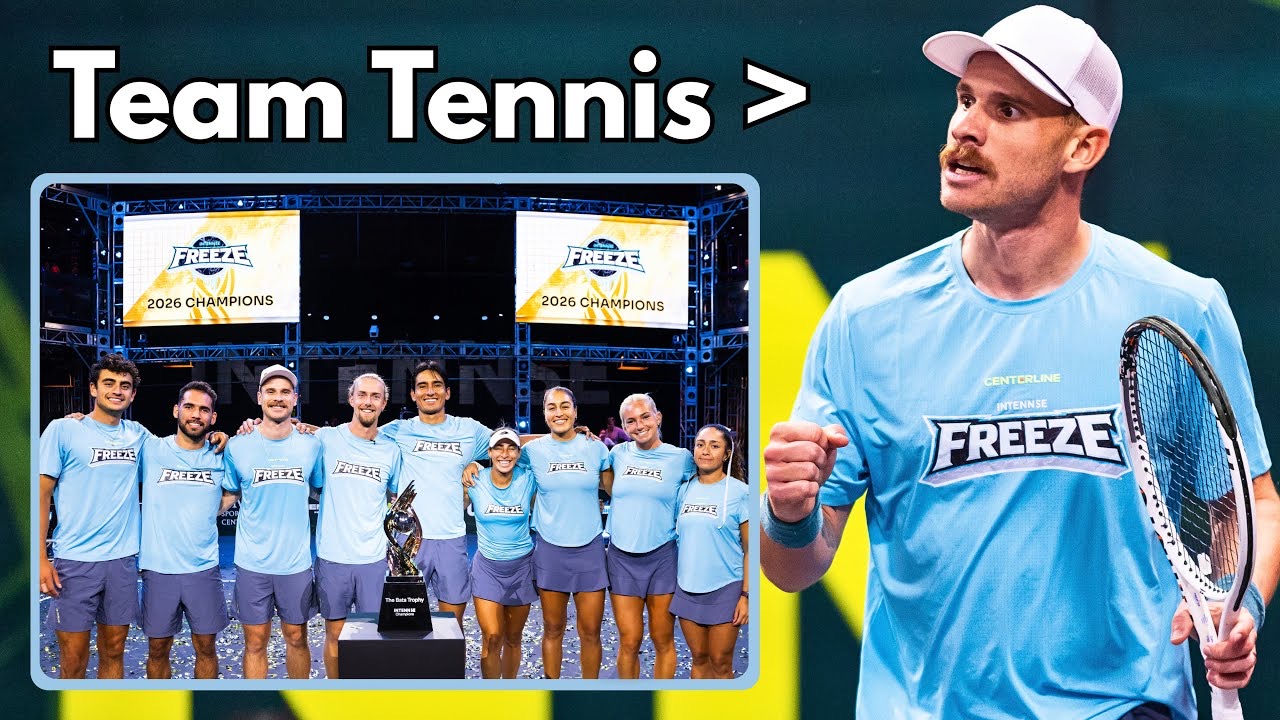
Karue Sell — “the best (and highest paid) experience of my tennis career” · 19:38 · Watch on YouTube